“After my accident, Dr. Unmesh and his team stabilised me first and rebuilt my pelvis carefully afterward.”
TRAUMA SURGERY
Complex &
Complex &
Pelvic Trauma
Specialised surgical management of high-energy pelvic ring and acetabular fractures — careful, staged care for major injuries.
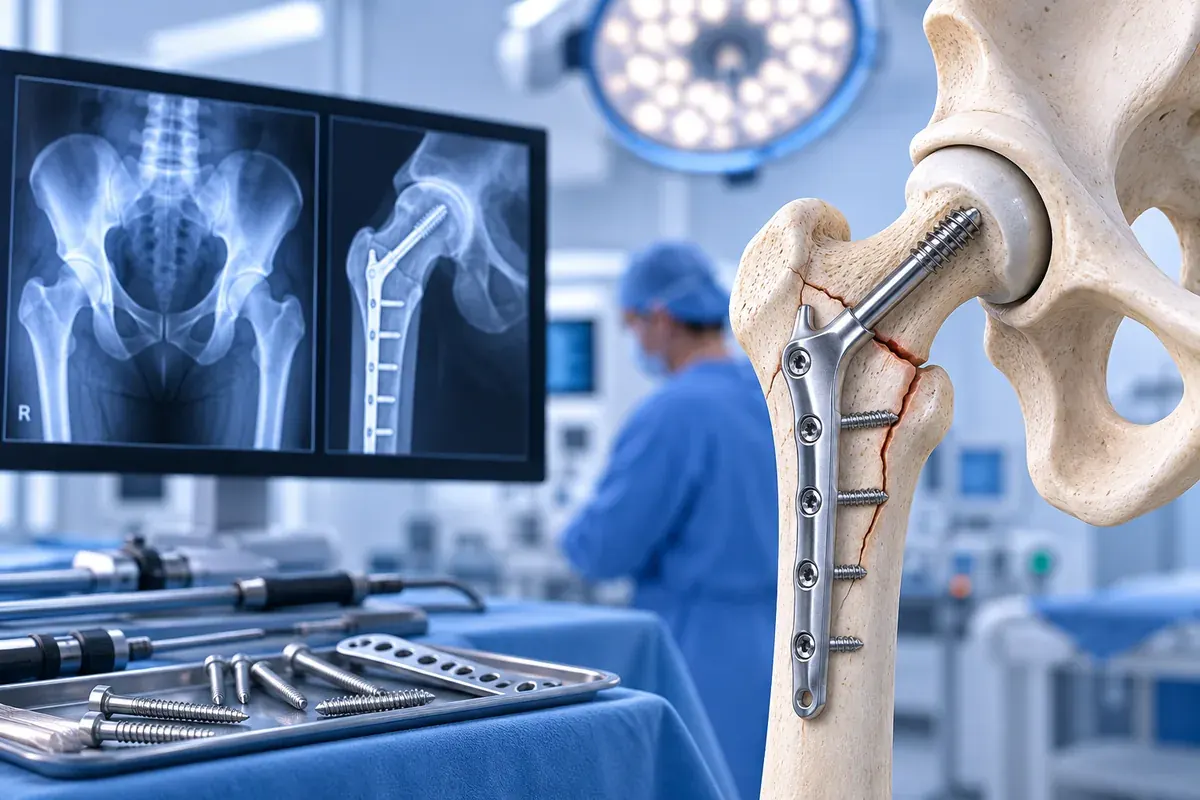
Complex & pelvic trauma surgery, at a glance.
A quick summary of what the treatment involves, who it's for, and what to expect — from recovery to cost.
Complex & pelvic trauma surgery treats high-energy fractures of the pelvic ring or hip socket, often from major injuries. Care is frequently staged — initial stabilisation followed by definitive fixation once you're medically stable, and coordinated with other specialist teams as needed. Recovery is gradual, with limited weight-bearing for around three months and continued improvement over six to twelve months.
ABOUT THE TREATMENT
Specialised Care for Major Pelvic Injuries
The pelvis surrounds major blood vessels, nerves and organs, so high-energy pelvic ring and acetabular fractures require careful, often staged surgical management. Dr. Unmesh's priority is first stabilising the patient, then precisely reconstructing the pelvic ring or hip socket to restore anatomy and protect long-term joint function. Every case is coordinated closely with the wider trauma team to address associated injuries.
Urgent
initial stabilisation
initial stabilisation
Precise
joint reconstruction
joint reconstruction
Coordinated
multi-team care
multi-team care
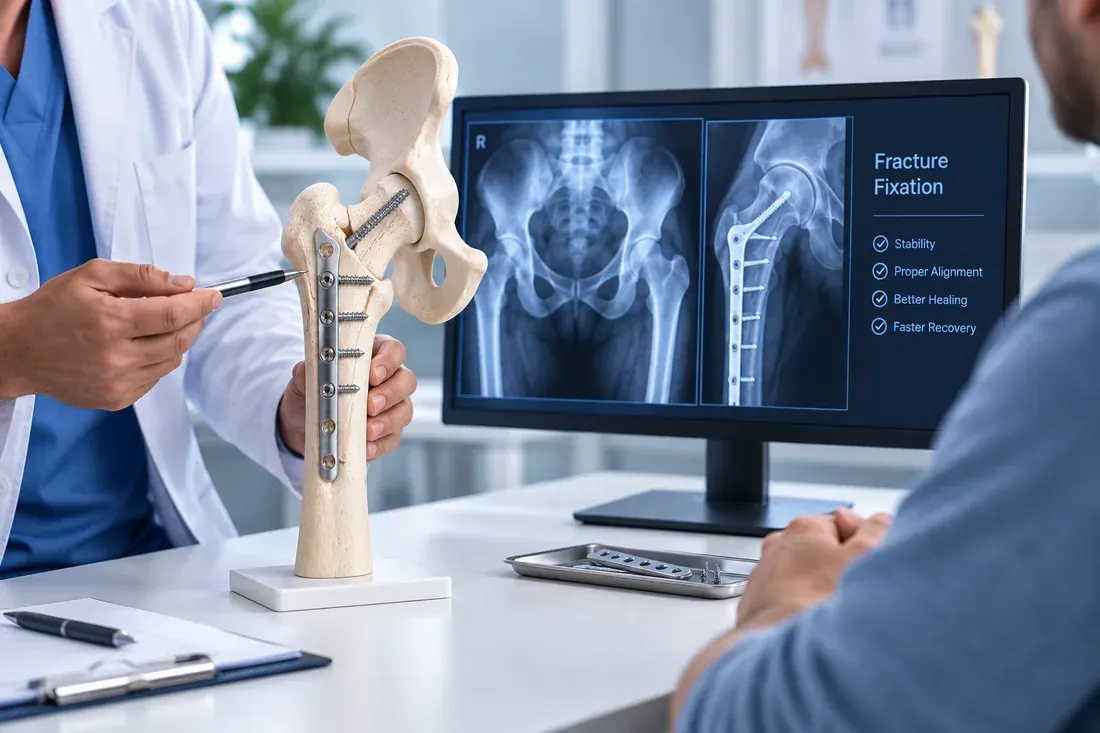
OUR SURGICAL APPROACH
Staged Trauma Technique
-
01
Urgent stabilisation to protect the patient
-
02
Detailed imaging & reconstruction planning
-
03
Definitive fixation — Dr. Unmesh confirms joint alignment before closing
BENEFITS
Benefits of Specialised
Pelvic Trauma Care
Careful, staged management built to protect you first, and reconstruct precisely second.
01
Rapid
Rapid
Stabilisation
Urgent initial care protects you before definitive surgery.
02
Precise
Precise
Reconstruction
Careful realignment of the pelvic ring or joint surface.
03
Coordinated
Coordinated
Team Care
Close coordination with trauma and critical care specialists.
04
Reduced Long-Term
Reduced Long-Term
Joint Risk
Precise joint reconstruction helps protect against future arthritis.
05
Individualised
Individualised
Trauma Plan
Every major injury is different — your plan reflects your specific case.
06
A Path Back
A Path Back
to Mobility
Structured rehabilitation supports your longer-term recovery.
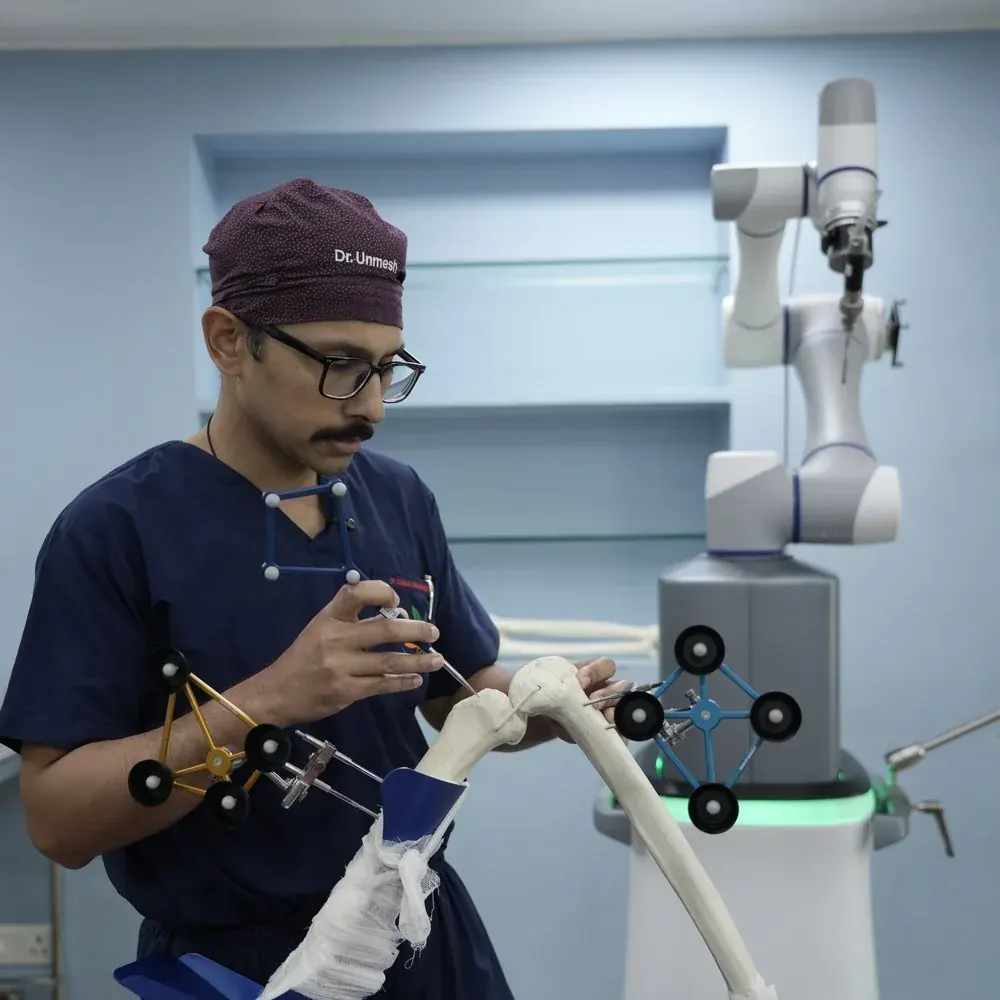
WHY CHOOSE DR. UNMESH
Experience. Expertise. Better Outcomes.
A patient-first approach, backed by years of experience and advanced surgical expertise, to help you move better and live pain-free.
19+
Years of
Experience
Experience
1,100+
Joint & Trauma
Surgeries
Surgeries
14,000+
Surgeries
Performed
Performed
“
Surgery is never the first conversation — my goal is to help you move better and live pain-free, with or without an operation.
— Dr. UnmeshSIGNS & WHO NEEDS IT?
Could You Need
Complex & Pelvic
Trauma Surgery?
This care applies to high-energy injuries affecting the pelvis or hip socket, usually identified urgently after a major accident.
-
01
A High-Energy Injury
Such as a road traffic accident or a significant fall from height.
-
02
Severe Pelvic Pain & Instability
Significant pain, swelling or inability to bear weight after injury.
-
03
monitoring
Imaging Confirms a Pelvic or Acetabular Fracture
CT or X-ray shows a break in the pelvic ring or hip socket.
-
04
Signs of Significant Blood Loss
Pelvic fractures can involve major bleeding requiring urgent attention.
-
05
Multiple Associated Injuries
Pelvic trauma often occurs alongside other injuries needing coordinated care.
-
06
Risk to Long-Term Joint Function
Fractures involving the hip socket need precise care to protect the joint's future.

HOW THE TREATMENT WORKS
A Step-by-Step Journey
Major pelvic trauma calls for a careful, staged approach — here's what the process looks like.
01
Urgent Assessment & Stabilisation
We prioritise your safety with immediate assessment and stabilisation of the injury.
02
radiology
Detailed Imaging & Planning
CT imaging maps the fracture pattern to plan precise reconstruction.
03
Definitive Reconstruction
Once stable, the pelvic ring or hip socket is precisely realigned and fixed.
04

Guided Rehabilitation
A carefully paced physiotherapy programme supports safe, gradual recovery.
05
Long-Term Joint Monitoring
We follow up closely to monitor healing and long-term joint health.
RECOVERY TIMELINE
What to Expect After Surgery
Recovery from major pelvic trauma is gradual, with steady improvement over many months.
Week 1–2
Close MonitoringHospital-based care and monitoring while healing begins.
STABILISINGMonth 1–3
Protected Weight-BearingLimited weight-bearing while the pelvis heals.
PROTECTED HEALINGMonth 3–4
Regaining RoutineGradual return to daily activities with continued therapy.
INCREASING INDEPENDENCEMonth 4–6
Building StrengthStructured rehabilitation rebuilds strength and confidence.
BUILDING STRENGTH6–12 Months
Long-Term RecoveryContinued improvement toward your fullest possible recovery.
LONG-TERM PROGRESS
FREQUENTLY ASKED QUESTIONS
Your Questions, Answered
What is complex and pelvic trauma surgery?
Complex and pelvic trauma surgery treats high-energy fractures of the pelvic ring or acetabulum (hip socket), often caused by major injuries such as road traffic accidents or falls from height.
Why are pelvic fractures treated differently from other fractures?
The pelvis surrounds major blood vessels, nerves and organs, so pelvic fractures can be life-threatening and often need urgent stabilisation before definitive surgery, unlike most limb fractures.
Why is treatment sometimes done in stages?
Severely injured patients are often first stabilised with an external fixator or other temporary measures to control bleeding and protect them, with definitive internal fixation performed once they are medically stable.
What is an acetabular fracture?
An acetabular fracture is a break in the hip socket itself. Because it involves a major joint surface, precise reconstruction is important to reduce the risk of future arthritis.
How is complex pelvic trauma surgery performed?
Depending on the fracture pattern, Dr. Unmesh uses plates and screws to reconstruct the pelvic ring or acetabulum, restoring the anatomy as precisely as possible to support long-term joint function.
Will I need care from other specialists too?
Major pelvic trauma often involves other injuries, so care is frequently coordinated with trauma, general surgery and critical care teams alongside Dr. Unmesh's orthopaedic management.
How long is the hospital stay?
Hospital stay varies widely depending on the severity of the injury and any associated injuries, but is typically longer than for isolated limb fractures, often one to two weeks or more.
How long does recovery take?
Recovery from pelvic trauma is gradual, with limited weight-bearing for around three months and continued improvement in strength and mobility over six to twelve months.
Will I develop arthritis after a pelvic or acetabular fracture?
Precise reconstruction of the joint surface reduces the risk, but some patients may develop arthritis over time, particularly with more severe injuries. Dr. Unmesh will monitor your joint long-term.
Am I a candidate for this surgery?
Candidacy depends on the fracture pattern, your overall injuries and medical stability. Dr. Unmesh will assess this urgently as part of your trauma care.