“My leg was fixed with plates after a fall, and it healed straight and strong.”
TRAUMA SURGERY
Fracture
Fracture
Fixation
Surgical stabilisation of broken bones using plates, screws, rods or external fixators — restoring alignment so your fracture can heal properly.
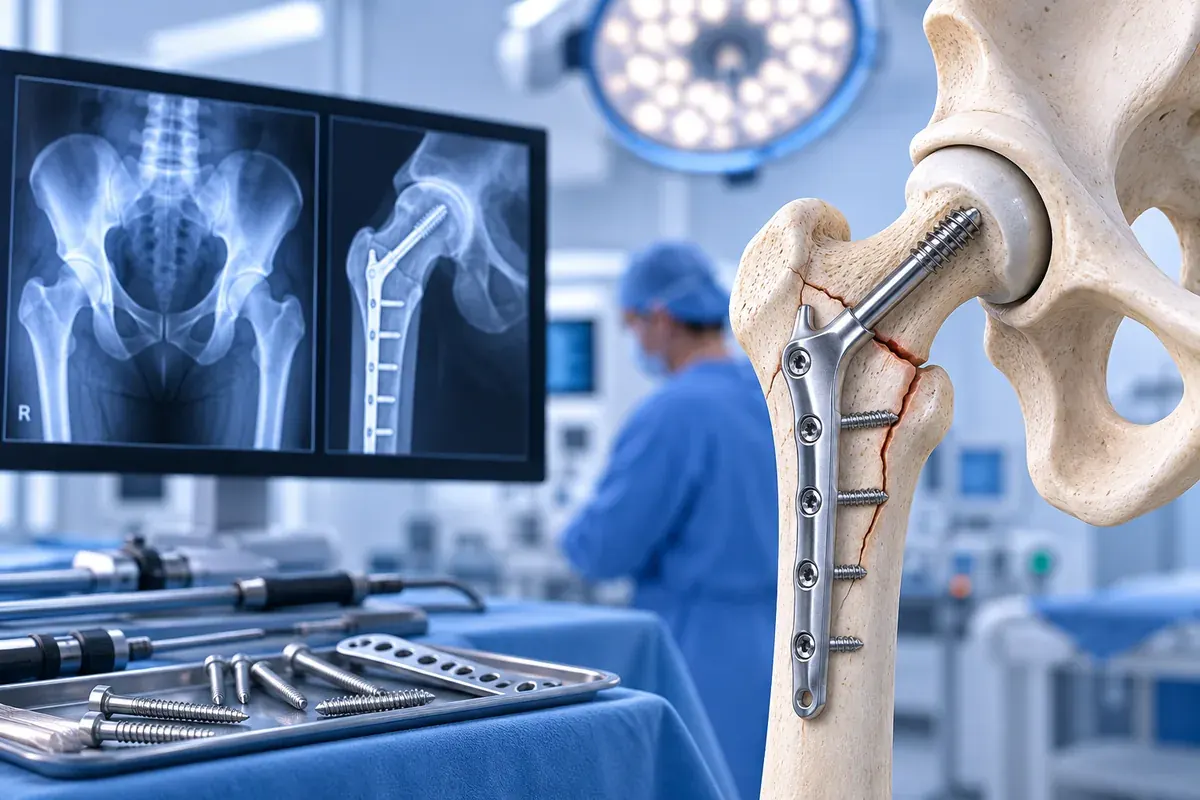
Fracture fixation, at a glance.
A quick summary of what the procedure involves, who it's for, and what to expect — from recovery to cost.
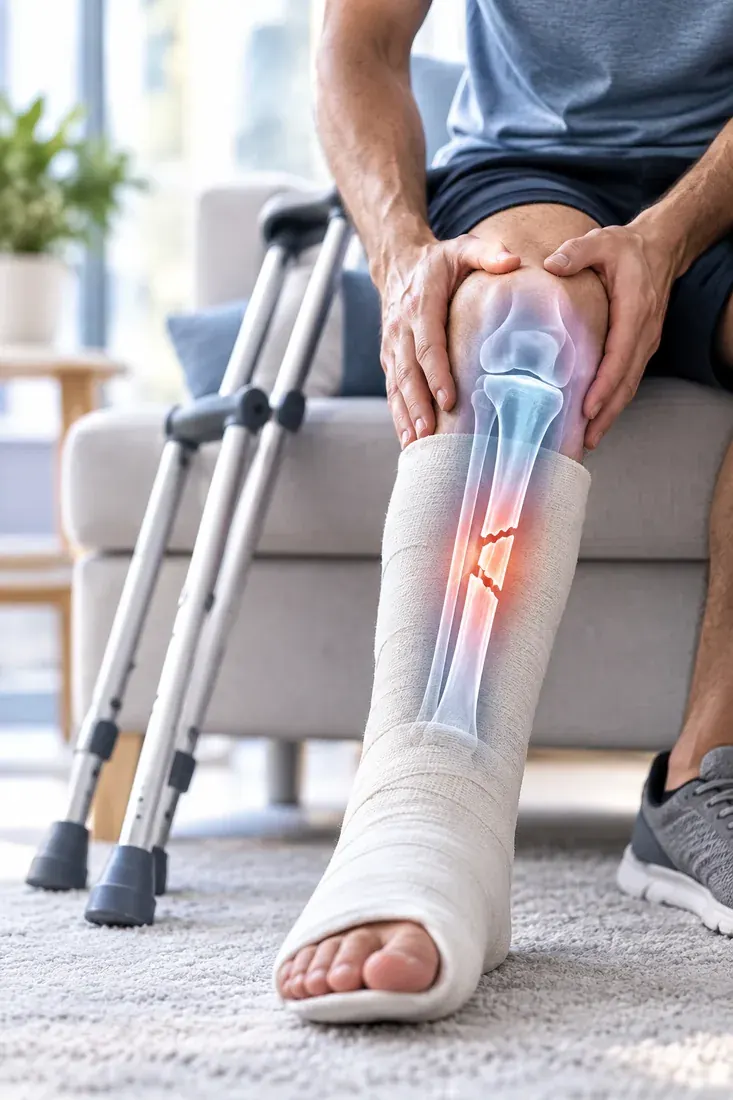
Fracture fixation surgery stabilises a displaced or unstable broken bone using plates, screws, rods or an external fixator, restoring alignment so it can heal correctly. Recommended when a fracture is displaced, unstable, involves a joint surface, or is unlikely to heal well in a cast alone. Bone healing generally takes 6 to 12 weeks, with a full return to activity over 3 to 6 months.
ABOUT THE TREATMENT
Restoring Alignment for Proper Healing
A displaced or unstable fracture won't heal correctly on its own. Fracture fixation surgery repositions the broken bone fragments and holds them in place with plates, screws, an intramedullary rod, or an external fixator frame, depending on the bone involved and the pattern of the break. Dr. Unmesh selects the fixation method best suited to your specific fracture, balancing stability, healing biology and your overall recovery.
Precise
fracture reduction
fracture reduction
Tailored
fixation method
fixation method
Structured
path to healing
path to healing
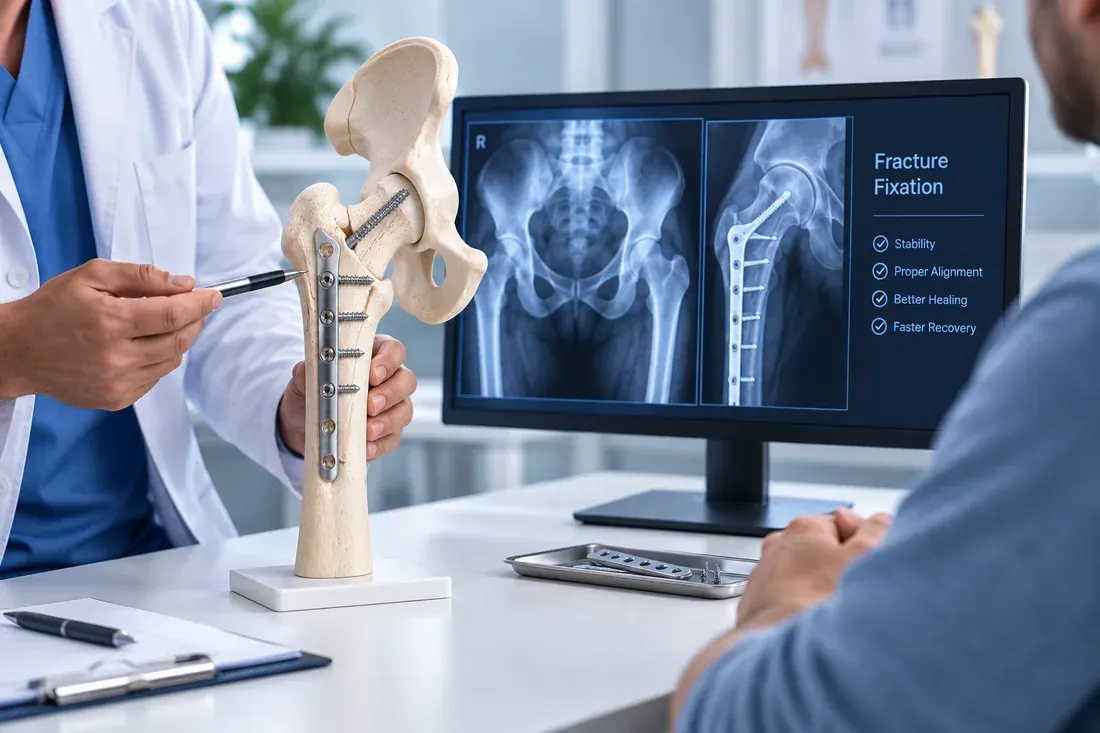
OUR SURGICAL APPROACH
Fixation Technique
-
01
Detailed imaging to assess the fracture pattern
-
02
Careful reduction to restore alignment
-
03
Fixation with plates, screws or a rod — Dr. Unmesh confirms stability before closing
BENEFITS
Benefits of Fracture
Fixation Surgery
Stable fixation gives your bone the best possible conditions to heal correctly.
01
Restored
Restored
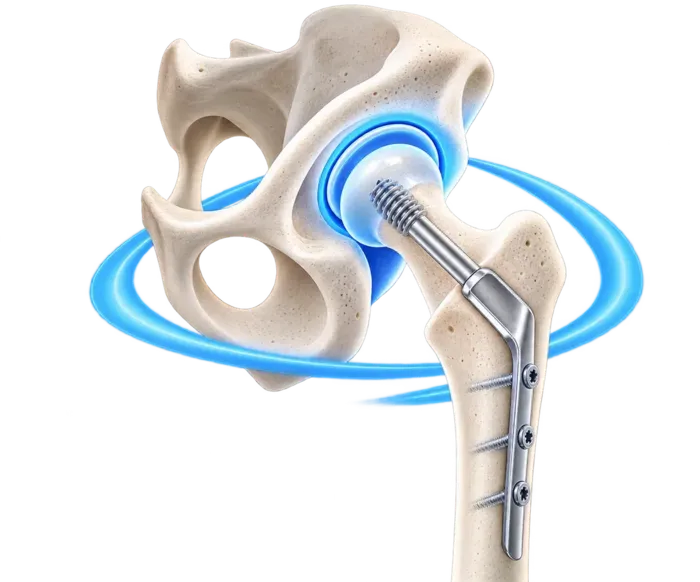
Alignment
Precise reduction repositions the bone for correct healing.
02
Stable
Stable
Fixation
Secure implants hold the fracture steady while it heals.
03
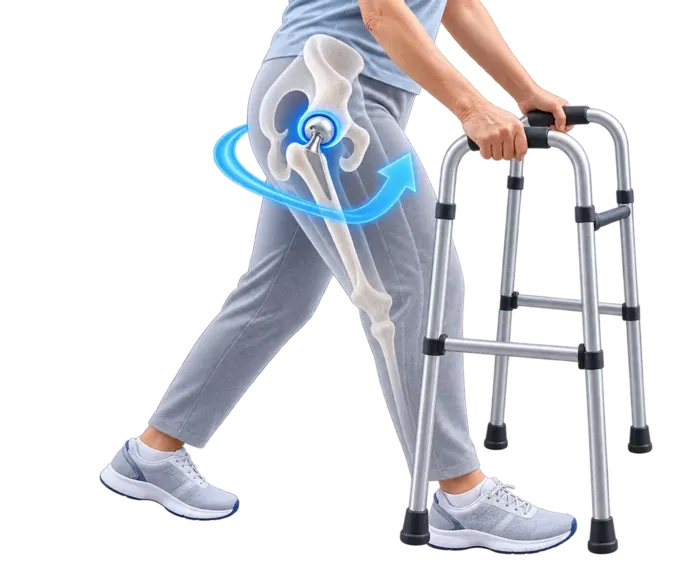
Earlier
Earlier
Mobilisation
Stable fixation often allows earlier, safer movement than a cast alone.
04
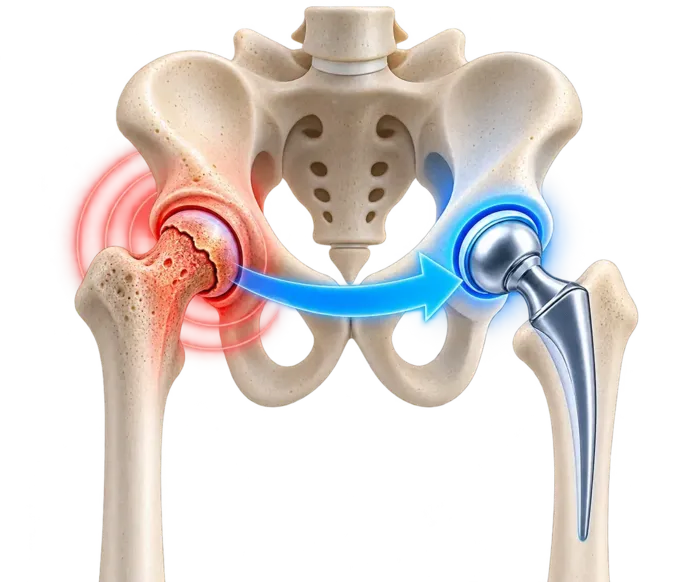
Reduced Pain
Reduced Pain
& Deformity
Correcting alignment relieves pain and prevents visible deformity.
05
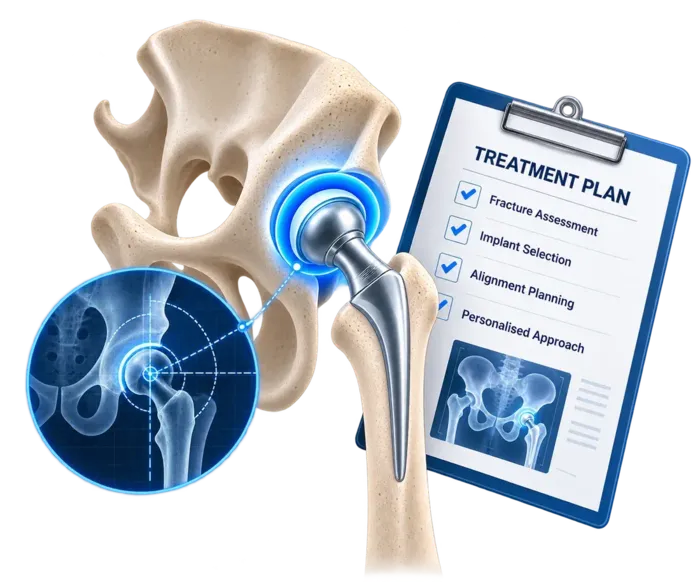
Fracture-Specific
Fracture-Specific
Planning
Your fixation method is chosen to match your exact fracture pattern.
06
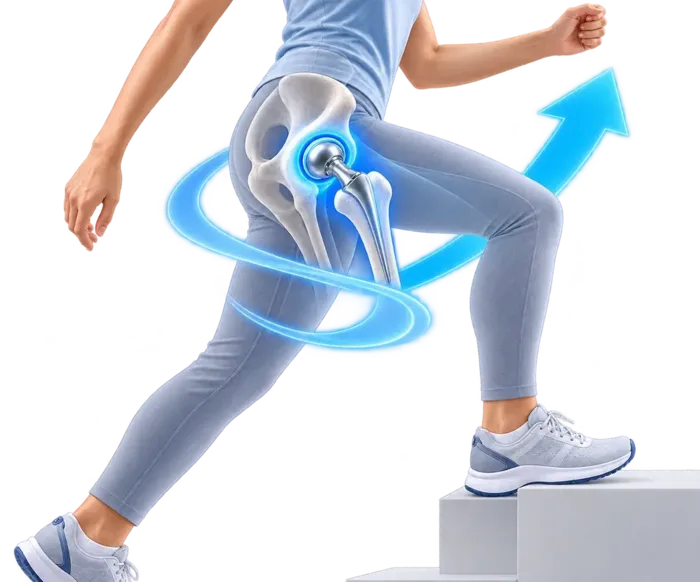
Path Back to
Path Back to
Full Function
A structured recovery plan supports your return to daily activity.
WHY CHOOSE DR. UNMESH
Experience. Expertise. Better Outcomes.
A patient-first approach, backed by years of experience and advanced surgical expertise, to help you move better and live pain-free.
19+
Years of
Experience
Experience
1,100+
Joint & Trauma
Surgeries
Surgeries
14,000+
Surgeries
Performed
Performed
“
Surgery is never the first conversation — my goal is to help you move better and live pain-free, with or without an operation.
— Dr. UnmeshSIGNS & WHO NEEDS IT?
Could You Need
Fracture
Fixation Surgery?
Not every fracture needs surgery. If your break is displaced, unstable or involves a joint, fixation may give you the best chance of a full recovery.
-
01
A Displaced or Angulated Fracture
Imaging shows the bone fragments are out of alignment.
-
02
An Unstable Fracture Pattern
The break is likely to shift further without fixation.
-
03
monitoring
A Fracture Involving a Joint Surface
The break extends into a joint, risking future arthritis if not aligned precisely.
-
04
Significant Pain & Swelling
Ongoing pain, swelling or an inability to bear weight after injury.
-
05
Multiple or Open Fractures
More than one break, or a fracture where the bone has broken through the skin.
-
06
Risk of Poor Healing in a Cast
The fracture pattern makes it unlikely to heal well with casting alone.
HOW THE SURGERY WORKS
A Step-by-Step Journey
From assessment to recovery, here's what the fracture fixation process looks like.
01
Assessment & Imaging
We assess your injury with imaging to understand the fracture pattern in detail.
02
radiology
Surgical Planning
We plan the fixation method — plates, screws, a rod or an external fixator — best suited to your fracture.
03
Fracture Reduction & Fixation
The bone is carefully realigned and stabilised with the chosen fixation implants.
04
Guided Rehabilitation
A structured, gradual physiotherapy programme supports safe bone healing and strength.
05
Healing Follow-Up
Regular imaging confirms healing progress until the bone is fully united.
RECOVERY TIMELINE
What to Expect After Surgery
Bone healing takes time — here's a general guide to what recovery looks like.
Day 1–2
Early MobilisationPain management and gentle movement as advised.
STABILISINGWeek 2–6
Protected HealingLimited weight-bearing while the bone begins to heal.
BONE HEALINGWeek 6–12
Bone UnionImaging confirms the fracture is healing and uniting.
INCREASING WEIGHT-BEARINGMonth 3–4
Building StrengthStructured physiotherapy rebuilds strength and range of motion.
BUILDING STRENGTH3–6 Months
Full RecoveryReturn to full activity, work and sport as advised.
BACK TO ACTIVITY
FREQUENTLY ASKED QUESTIONS
Your Questions, Answered
What is fracture fixation surgery?
Fracture fixation surgery stabilises a broken bone in its correct position using implants such as plates, screws, rods or an external fixator, allowing the bone to heal properly aligned.
Do all fractures need surgery?
No, many fractures heal well with a cast or brace. Surgery is generally recommended when the fracture is displaced, unstable, involves a joint surface, or is unlikely to heal well without fixation.
What implants are used to fix a fracture?
Depending on the bone and fracture pattern, Dr. Unmesh may use metal plates and screws, an intramedullary rod inside the bone, or an external fixator frame. The choice is tailored to your specific injury.
How soon after injury should fixation be done?
Timing depends on the fracture and your overall condition. Some fractures are fixed urgently, while others are stabilised once swelling has settled, typically within a few days to two weeks.
How long does the bone take to heal?
Most fractures heal in 6 to 12 weeks, depending on the bone involved, the fracture pattern and your overall health, though full strength continues to improve for several months.
Will I need to be non-weight-bearing?
Many fractures require a period of limited or no weight-bearing while the bone heals. Dr. Unmesh will give you a specific weight-bearing schedule based on your fracture and fixation.
Will the implant need to be removed later?
Most plates, screws and rods are left in place permanently once the bone has healed, unless they cause irritation or discomfort, in which case removal can be discussed.
What are the risks of fracture surgery?
As with any surgery, risks include infection, delayed healing or nerve and blood vessel injury, though these are uncommon. Dr. Unmesh will discuss the specific risks relevant to your fracture.
When can I return to work or sport?
This depends on the fracture and your occupation or activity level. Many patients return to desk-based work within weeks, while a full return to sport or manual work may take 3 to 6 months.
What if my fracture doesn't heal properly?
If a fracture fails to heal, it is called a non-union and may need further treatment, including revision fixation and bone grafting. Dr. Unmesh monitors healing closely to catch this early.