“My fracture hadn't healed after eight months. The bone graft finally got it moving.”
TRAUMA SURGERY
Non-Union
Non-Union
Management
Specialised treatment for a fracture that hasn't healed — combining revised fixation with bone grafting to restart the healing process.
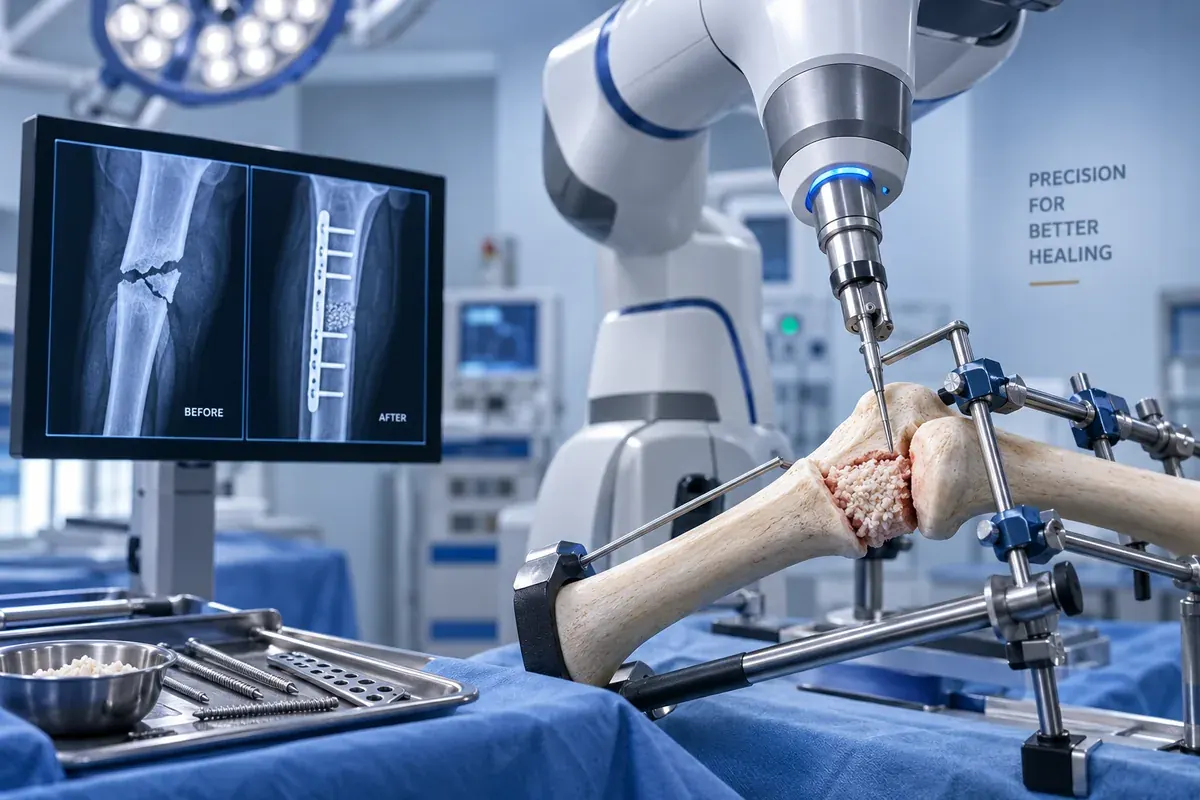
Non-union management, at a glance.
A quick summary of what the treatment involves, who it's for, and what to expect — from recovery to cost.
Non-union management treats a fracture that has failed to heal, usually by revising the fixation, preparing the bone ends, and adding a bone graft to restart healing. Recommended when a fracture shows no meaningful healing beyond the expected timeframe, typically six to eight months. Healing after treatment generally takes 4 to 6 months, depending on the underlying cause.
ABOUT THE TREATMENT
Restarting Healing for a Stalled Fracture
Sometimes a fracture simply doesn't heal, due to poor blood supply, infection, excessive movement at the fracture site, or other factors. Non-union management addresses the underlying cause, revises the fixation where needed, and adds a bone graft to provide the biological stimulus the bone needs to unite. Dr. Unmesh investigates each non-union thoroughly, since identifying the cause is key to successful treatment.
Thorough
cause investigation
cause investigation
Bone
grafting
grafting
Restored
path to healing
path to healing
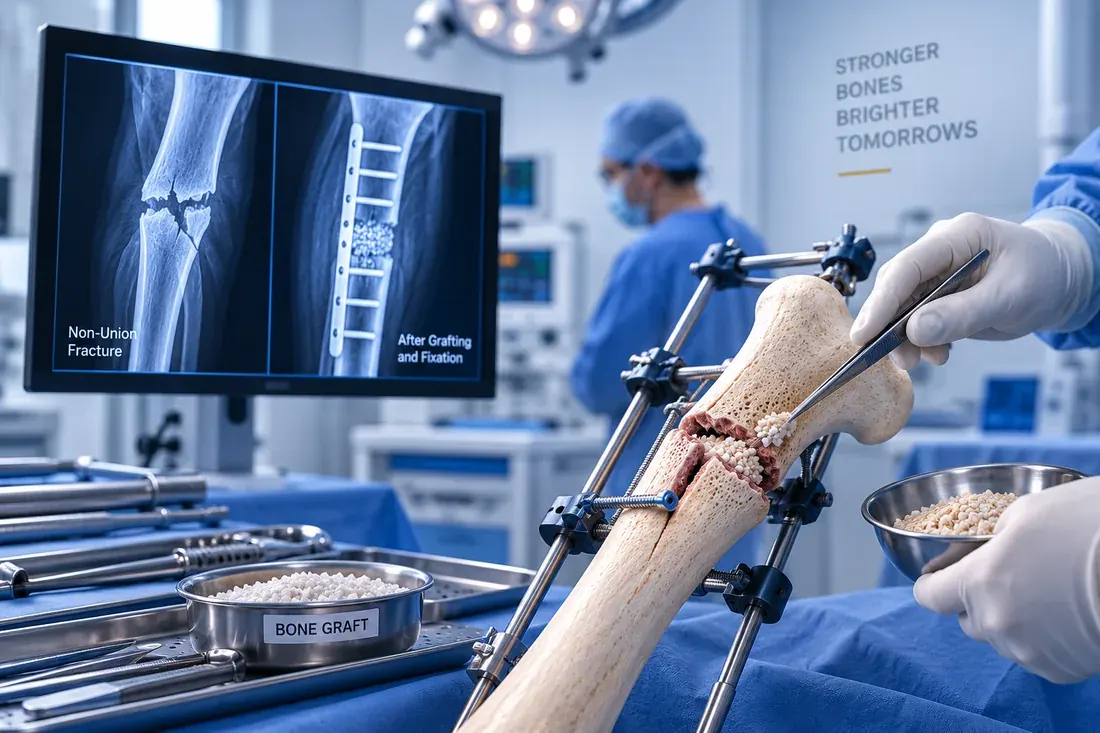
OUR SURGICAL APPROACH
Non-Union Technique
-
01
Detailed work-up to confirm the cause of non-union
-
02
Revision of fixation where needed
-
03
Bone grafting to restart healing — Dr. Unmesh confirms stability before closing
BENEFITS
Benefits of Non-Union
Management
A fresh path to healing for a fracture that hasn't united on its own.
01
Identifies the
Identifies the
Root Cause
Thorough investigation finds why healing stalled in the first place.
02
Restarts
Restarts
Bone Healing
Bone grafting provides the biological stimulus needed to unite.
03
Stronger
Stronger
Fixation
Revised hardware provides the stability healing requires.
04
Relief From
Relief From
Ongoing Pain
Addressing the non-union relieves pain from the unstable fracture site.
05
Individualised
Individualised
Treatment Plan
Every non-union is different — your plan is built around your specific cause.
06
A Path Back
A Path Back
to Function
Successful union supports your return to normal daily activity.
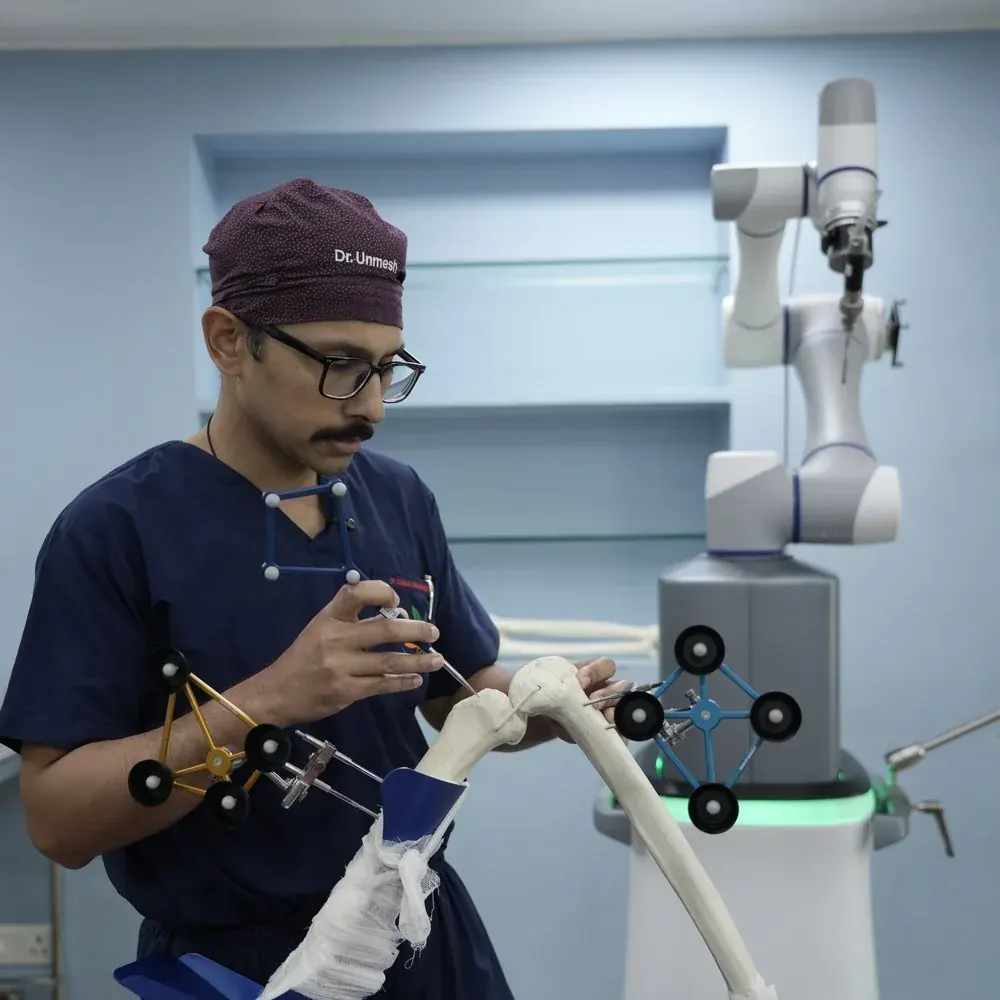
WHY CHOOSE DR. UNMESH
Experience. Expertise. Better Outcomes.
A patient-first approach, backed by years of experience and advanced surgical expertise, to help you move better and live pain-free.
19+
Years of
Experience
Experience
1,100+
Joint & Trauma
Surgeries
Surgeries
14,000+
Surgeries
Performed
Performed
“
Surgery is never the first conversation — my goal is to help you move better and live pain-free, with or without an operation.
— Dr. UnmeshSIGNS & WHO NEEDS IT?
Could You Need
Non-Union
Management?
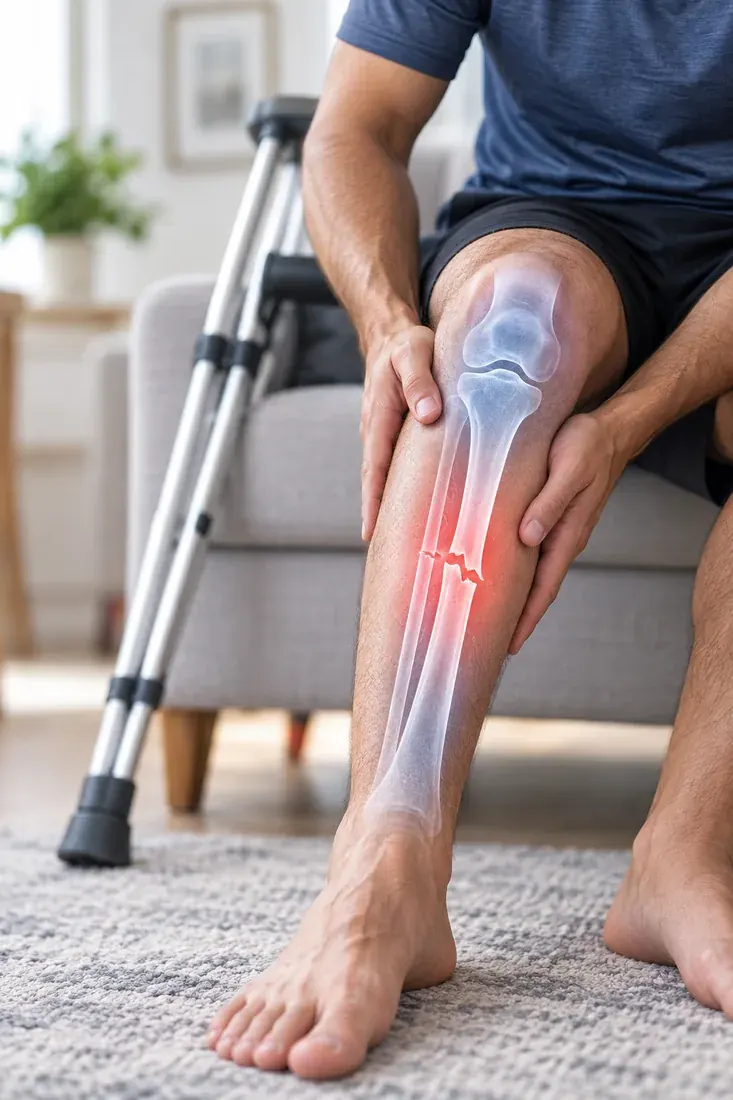
If a previous fracture is still causing symptoms months later, it may not have healed properly. Here's what to look out for.
-
01
Ongoing Pain at the Fracture Site
Pain that persists well beyond the expected healing time.
-
02
Movement or Instability at the Site
A feeling of give or movement where the bone should be solid.
-
03
monitoring
No Progress on Follow-Up X-rays
Imaging shows little or no change in healing over time.
-
04
Signs of Infection
Persistent swelling, warmth, redness or drainage at the site.
-
05
Difficulty Bearing Weight or Using the Limb
Ongoing difficulty months after your original injury.
-
06
Risk Factors for Poor Healing
Smoking, diabetes or other factors that can slow bone healing.
HOW THE TREATMENT WORKS
A Step-by-Step Journey
Treating a non-union starts with understanding why healing stalled — here's what the process looks like.
01
Investigating the Cause
We assess imaging, blood supply and infection risk to understand why your fracture hasn't healed.
02
radiology
Surgical Planning
We plan the fixation revision and bone grafting approach for your specific non-union.
03
Revision Fixation & Bone Grafting
The bone ends are prepared, grafted and stabilised to give healing the best chance.
04
Guided Rehabilitation
A structured, gradual physiotherapy programme supports safe healing.
05
Healing Follow-Up
Regular imaging confirms healing progress until the bone is fully united.
RECOVERY TIMELINE
What to Expect After Surgery
Healing a non-union takes time, especially given the biology involved — here's a general guide.
Week 1–2
Early RecoveryPain management and protection of the surgical site.
EARLY RECOVERYWeek 2–8
Protected Weight-BearingLimited weight-bearing while the graft integrates.
GRAFT INTEGRATIONMonth 2–4
Signs of UnionImaging begins to show new bone healing across the site.
EARLY UNIONMonth 4–6
Building StrengthStructured physiotherapy rebuilds strength and confidence.
BUILDING STRENGTH6+ Months
Full RecoveryReturn to full activity once healing is confirmed.
BACK TO ACTIVITY
FREQUENTLY ASKED QUESTIONS
Your Questions, Answered
What is a non-union?
A non-union is a fracture that has failed to heal within the expected time, usually around six to eight months, and shows no meaningful signs of progressing to healing on imaging.
What causes a fracture not to heal?
Causes include poor blood supply to the bone, infection, excessive movement at the fracture site, smoking, certain medical conditions, or inadequate initial fixation. Often more than one factor is involved.
How is a non-union diagnosed?
Dr. Unmesh diagnoses a non-union using X-rays or CT imaging that show a persistent gap or lack of healing at the fracture site, combined with ongoing pain or instability well beyond the expected healing time.
How is non-union treated?
Treatment typically involves revising the fixation, preparing the bone ends, and adding a bone graft to stimulate healing. In some cases, addressing an underlying infection is required first.
What is a bone graft and where does it come from?
A bone graft provides the biological material needed to restart healing. It may be taken from your own body (commonly the pelvis), from a bone bank, or a synthetic substitute, depending on your case.
Will I need new hardware?
Often yes. The existing plate, screws or rod may be loose, broken or simply unable to provide adequate stability, so revision to more robust fixation is frequently part of non-union treatment.
How long does a non-union take to heal after treatment?
Healing after non-union surgery generally takes 4 to 6 months, though this varies depending on the cause of the non-union, the bone involved and your overall health.
Does smoking affect healing?
Yes, smoking significantly impairs bone healing and is strongly linked to non-union. Dr. Unmesh will discuss smoking cessation as an important part of your treatment plan.
Is infection always the cause of non-union?
No, infection is one possible cause among several, including poor blood supply or mechanical instability. Dr. Unmesh will investigate for infection as part of a thorough non-union work-up.
Am I a candidate for non-union treatment?
If your fracture hasn't healed within the expected timeframe and you have ongoing pain or instability, Dr. Unmesh can assess whether non-union surgery is right for you through examination and imaging.