“I was told I could delay a knee replacement for years, and the osteotomy delivered.”
KNEE PRESERVATION
Knee Osteotomy
Knee Osteotomy
(HTO/DFO)
A bone realignment surgery that shifts weight away from a damaged part of your knee, relieving pain and helping active patients delay or avoid knee replacement.
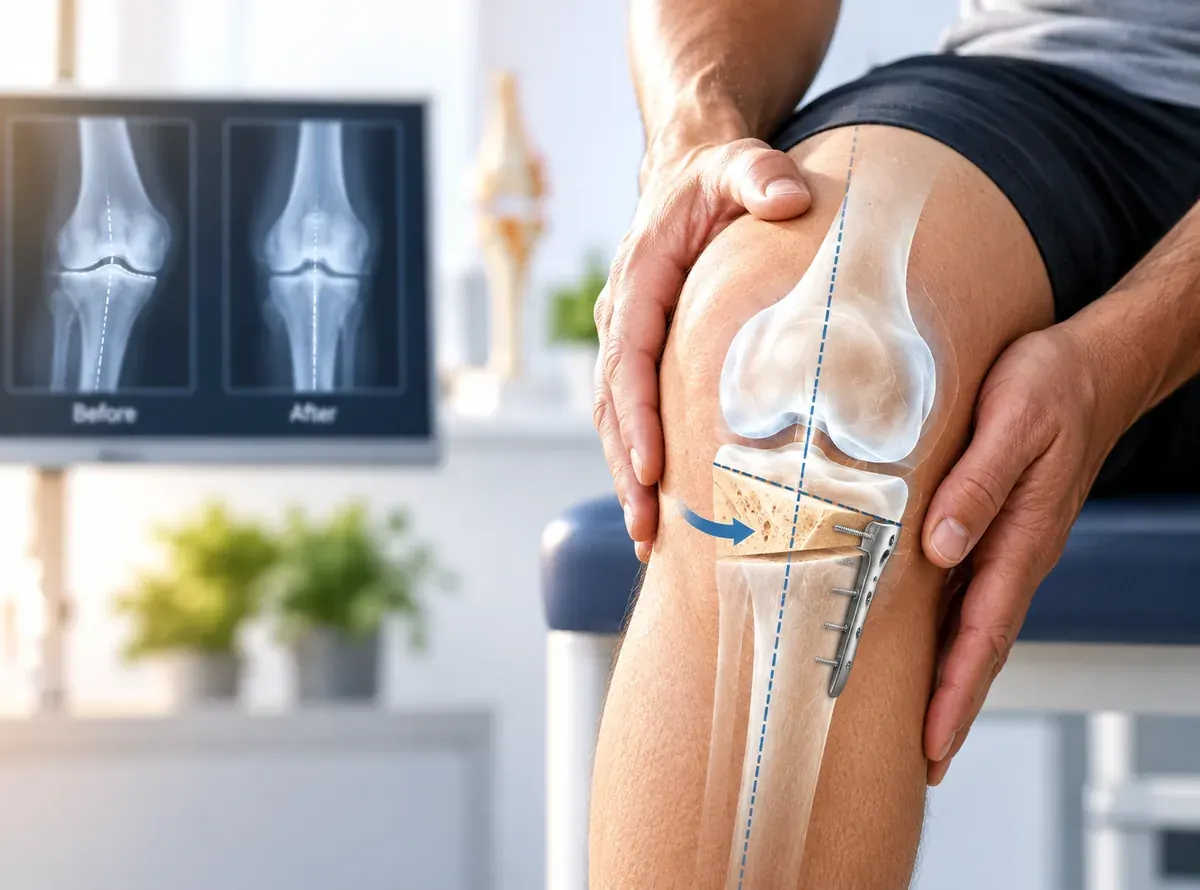
Knee osteotomy (HTO/DFO), at a glance.
A quick summary of what the procedure involves, who it's for, and what to expect — from recovery to cost.
Knee osteotomy (HTO/DFO) is a bone realignment surgery that reshapes the tibia or femur to shift weight away from a damaged part of the knee. Recommended for younger, active patients with one-sided arthritis and a leg alignment problem. Bone healing typically takes 3 to 4 months, with sport resuming around 6 to 9 months. Total cost varies by complexity and is confirmed during consultation.
ABOUT THE TREATMENT
A Smarter Approach to Knee Realignment
A knee osteotomy reshapes the tibia or femur to shift weight away from a damaged part of the knee, correcting an underlying alignment problem such as bow legs or knock knees. Dr. Unmesh plans the exact correction needed from your imaging, then secures the new alignment with a plate and screws while the bone heals. The result is reduced pain, a preserved natural knee, and a real chance to delay knee replacement.
Personalised
correction
correction
Precise
realignment
realignment
Preserves
your natural knee
your natural knee
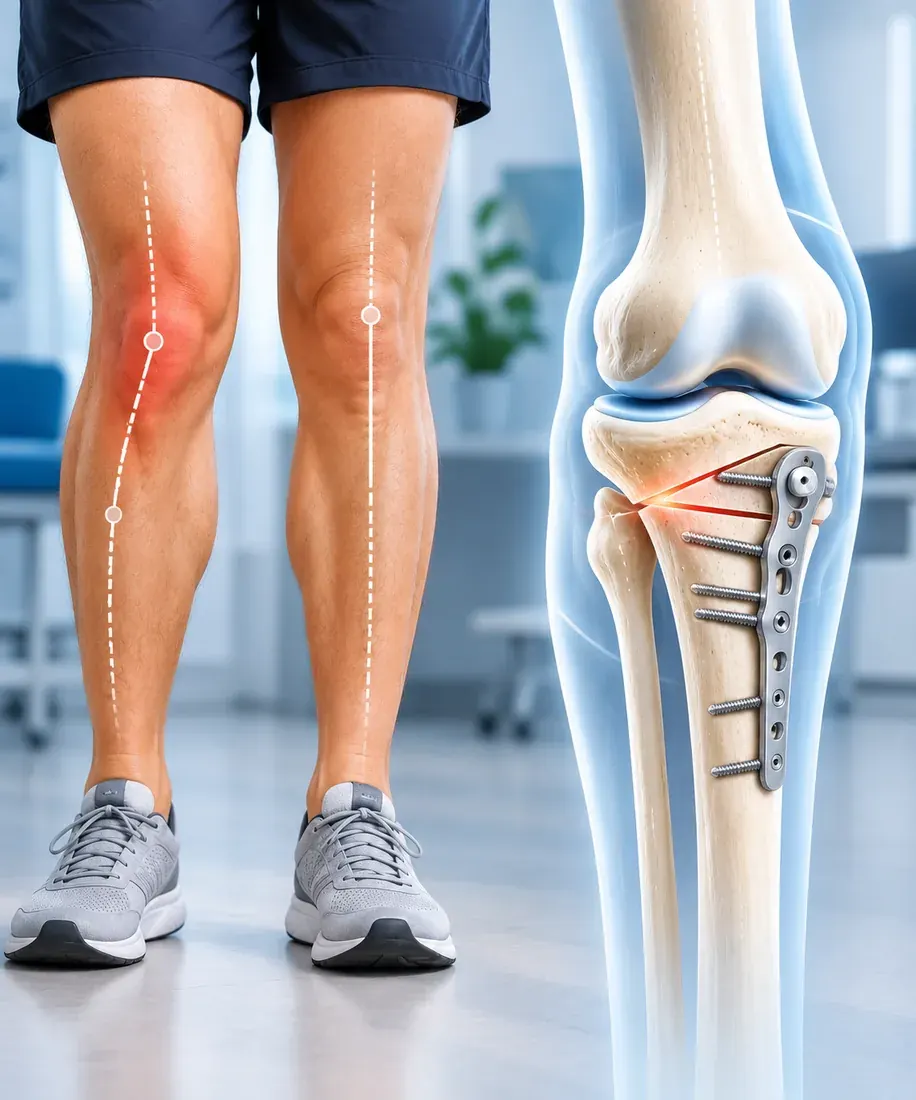
OUR SURGICAL APPROACH
Precise Bone Realignment
-
01
Detailed pre-surgical imaging & planning
-
02
Corrective bone realignment
-
03
Secured with plate & screws — Dr. Unmesh personally confirms alignment before closing
BENEFITS
Benefits of Knee
Osteotomy
A precise path to a more comfortable knee. Correcting your alignment helps protect your natural joint for longer.
01
Preserves Your
Preserves Your
Natural Knee
Your own joint is preserved rather than replaced with an implant.
02
Corrects the
Corrects the
Underlying Cause
Realigning the leg addresses the deformity driving your knee pain.
03
Delays Knee
Delays Knee
Replacement
Many patients delay the need for replacement by 10 years or more.
04
Ideal for
Ideal for
Active Patients
A preferred option for younger, active patients wanting to stay active.
05
Personalised
Personalised
Correction
The exact realignment is planned around your specific knee anatomy.
06
Reduces
Reduces
Joint Strain
Shifting weight off the damaged area reduces ongoing wear on the joint.
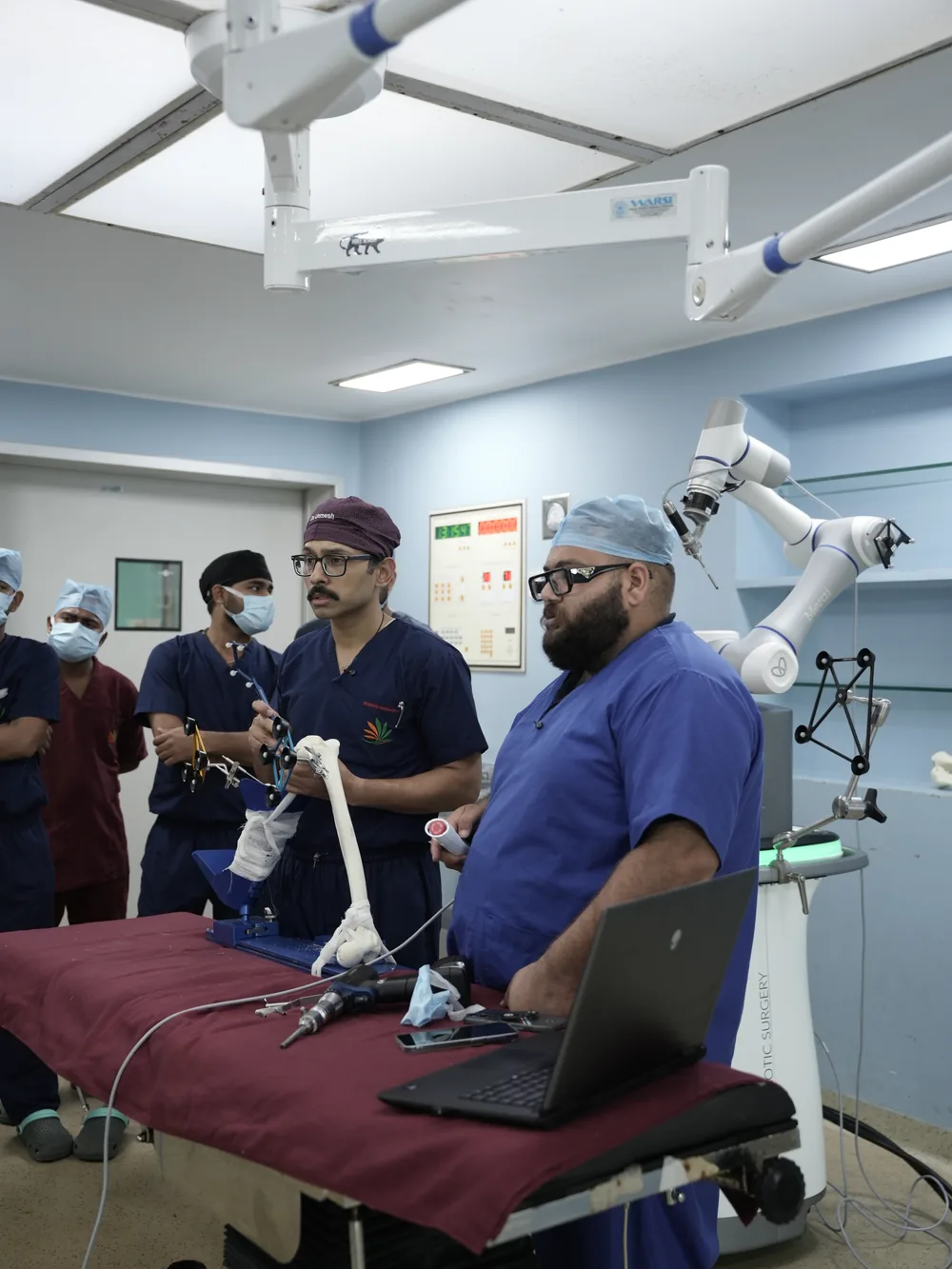
WHY CHOOSE DR. UNMESH
Experience. Expertise. Better Outcomes.
A patient-first approach, backed by years of experience and advanced surgical expertise, to help you move better and live pain-free.
19+
Years of
Experience
Experience
1,100+
Joint
Replacements
Replacements
14,000+
Surgeries
Performed
Performed
“
Surgery is never the first conversation — my goal is to help you move better and live pain-free, with or without an operation.
— Dr. UnmeshSYMPTOMS & WHO NEEDS IT?
Could Knee
Osteotomy Be
Right for You?
Not every knee problem needs replacement. If your pain is one-sided and linked to your leg alignment, osteotomy may be a suitable option.
-
01
Pain on One Side of the Knee
Discomfort limited to the inner or outer part of the knee, not the whole joint.
-
02
Bow Legs or Knock Knees
A visible alignment issue that shifts weight unevenly across the knee.
-
03
monitoring
Early to Moderate Arthritis
X-rays show wear confined to one compartment of the knee.
-
04
Younger, Active Lifestyle
Generally suits younger patients who want to remain active long-term.
-
05
Wanting to Delay Replacement
You would like to preserve your natural knee for as long as possible.
-
06
Good Ligament Stability
Your knee ligaments remain strong, supporting a good surgical outcome.
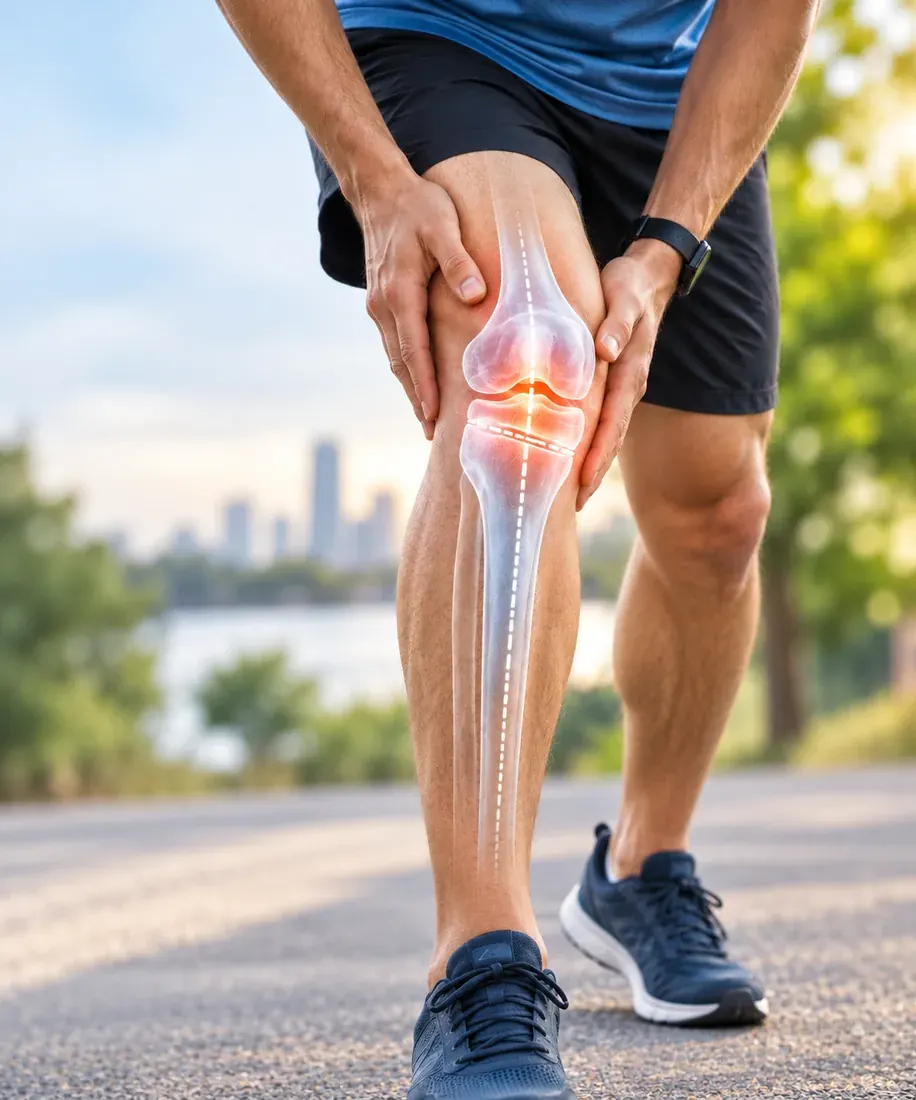
HOW THE SURGERY WORKS
A Step-by-Step Journey
From consultation to recovery, we ensure a smooth and well-guided experience at every stage of your osteotomy.
01
Consultation & Evaluation
We understand your condition, discuss your goals and create a personalised treatment plan.
02
Advanced Planning
Weight-bearing X-rays help plan the precise correction your knee needs.
03
square_foot
Knee Osteotomy Surgery
The bone is carefully reshaped and secured with a plate to correct alignment.
04
Recovery & Rehabilitation
A protected weight-bearing plan allows the corrected bone to heal fully.
05
Long-Term Support
We continue to monitor your knee to help preserve your results for years to come.
RECOVERY TIMELINE
What to Expect After Surgery
Osteotomy involves healing a surgically corrected bone, so recovery takes longer than keyhole knee surgery.
Day 1–2
Protected StartStanding and walking with crutches, with weight-bearing carefully limited.
PROTECTED START2–6 Weeks
Bone Healing BeginsLimited weight-bearing protects the corrected bone as it starts to heal.
PROTECTING THE BONE6–12 Weeks
Progressive LoadingWeight-bearing gradually increases as the bone continues to heal.
INCREASING MOBILITY3–4 Months
Bone Union & StrengthMost patients achieve full bone healing and continue to build strength.
BUILDING STRENGTH6–9 Months
Return to ActivityMost patients return to full activity and sport once fully healed.
A MORE ACTIVE YOU
FREQUENTLY ASKED QUESTIONS
Your Questions, Answered
What is a knee osteotomy (HTO/DFO)?
A knee osteotomy reshapes the tibia (HTO) or femur (DFO) to shift your body's weight away from a damaged part of the knee. By correcting the underlying alignment, it relieves pain and can help delay or avoid knee replacement.
How is osteotomy different from knee replacement?
Osteotomy realigns and preserves your natural knee joint rather than resurfacing it. It suits younger, active patients with early arthritis confined to one side of the knee, and is generally not appropriate once arthritis has spread throughout the joint.
How long does the surgery take?
A knee osteotomy typically takes 60 to 90 minutes, depending on the correction needed. Careful pre-surgical planning helps Dr. Unmesh achieve the precise realignment your knee requires.
When can I put weight on my leg?
Most patients need a period of limited or partial weight-bearing for several weeks while the bone heals, similar to recovering from a fracture. Dr. Unmesh will guide your specific weight-bearing schedule based on your surgery.
How long is the recovery period?
Bone healing typically takes 3 to 4 months, with a full return to demanding activity or sport around 6 to 9 months. Osteotomy takes longer to recover from than keyhole knee surgery, since it involves healing a surgically corrected bone.
Will I need a plate and screws?
Yes, the corrected bone position is typically secured with a plate and screws while it heals. These are usually left in place permanently unless they cause irritation, in which case they can be removed later.
Is knee osteotomy safe?
Yes, knee osteotomy is a well-established procedure with a strong track record in appropriately selected patients. Careful pre-surgical planning and precise correction help minimise risk, and Dr. Unmesh monitors your recovery closely.
Am I a candidate for osteotomy?
Osteotomy generally suits younger, active patients with early arthritis limited to one side of the knee, along with a bow-leg or knock-knee alignment. Dr. Unmesh will confirm candidacy through examination and weight-bearing X-rays.
How long does the benefit of osteotomy last?
Many patients enjoy significant pain relief and delayed need for knee replacement for 10 years or more after osteotomy. Results vary by individual, and Dr. Unmesh will discuss realistic expectations based on your knee.
Can I still have a knee replacement later if needed?
Yes, osteotomy does not close the door to knee replacement in the future. If arthritis progresses over time, Dr. Unmesh can discuss partial or total knee replacement as a later option, so you always have a clear path forward.