“My shoulder kept dislocating during sport. It's been completely stable since surgery.”
SPORTS & SHOULDER SURGERY
Shoulder Arthroscopy
Shoulder Arthroscopy
& Bankart Repair
Arthroscopic repair of a torn shoulder labrum — restoring stability for patients with recurrent shoulder dislocation.
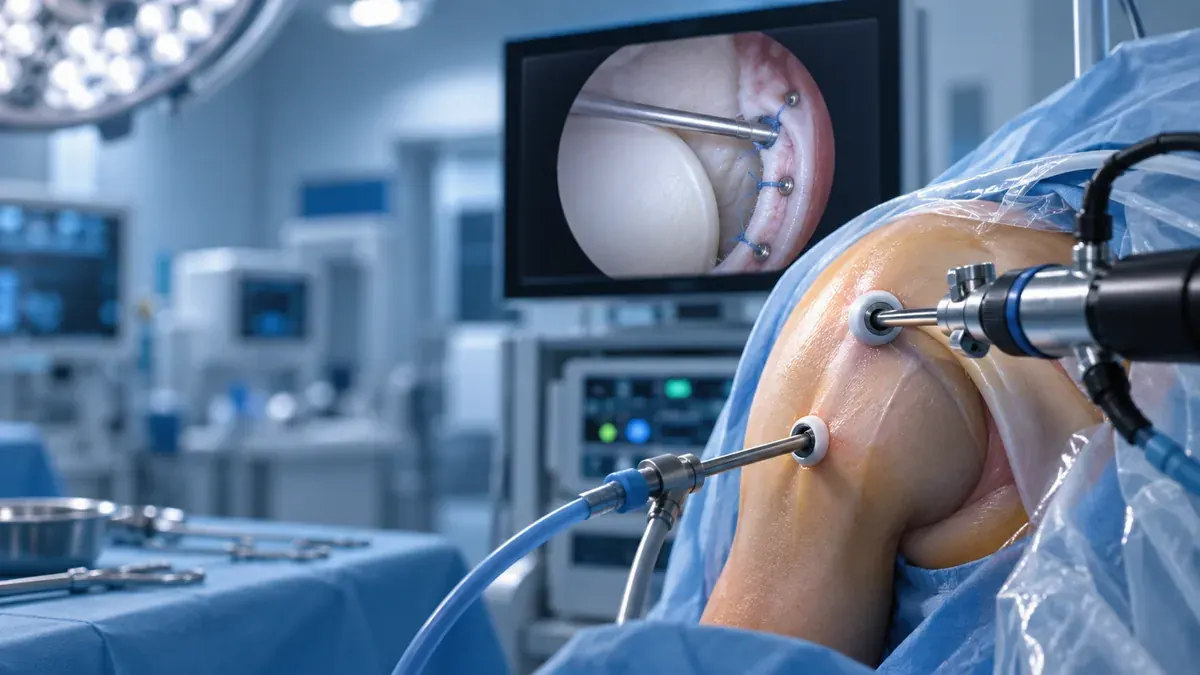
Shoulder arthroscopy & Bankart repair, at a glance.
A quick summary of what the procedure involves, who it's for, and what to expect — from recovery to cost.
Shoulder arthroscopy & Bankart repair reattaches a torn labrum to the shoulder socket rim, treating instability after dislocation. Recommended after recurrent dislocations, in younger or highly active patients, or with significant structural damage on imaging. Most patients wear a sling for 3 to 4 weeks, with a full return to contact or overhead sport around 4 to 6 months.
ABOUT THE TREATMENT
Restoring Stability After Shoulder Dislocation
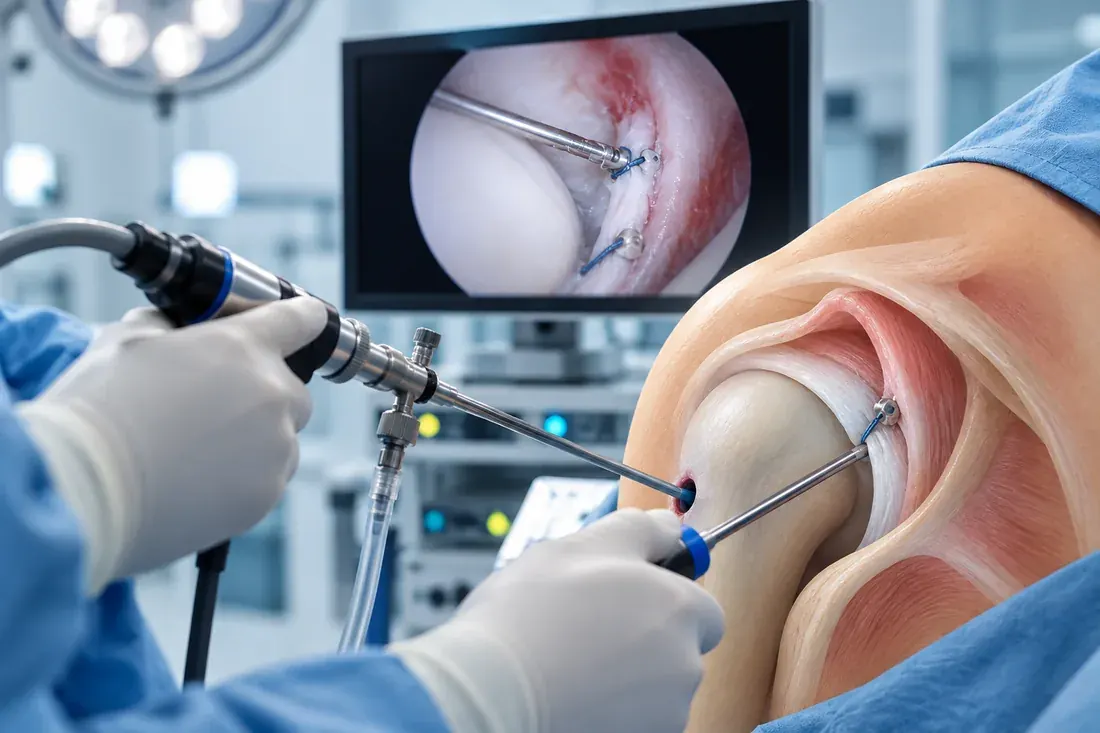
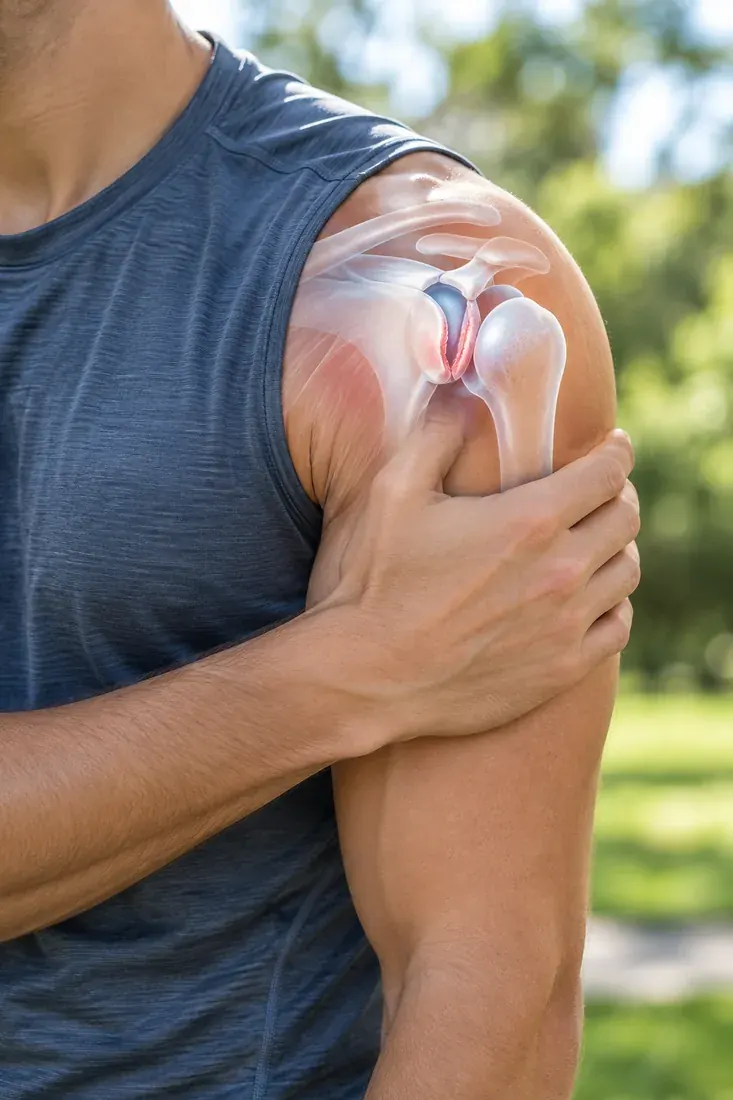
A shoulder dislocation often tears the labrum, the ring of cartilage that deepens the socket and helps keep the joint stable — known as a Bankart lesion. Left untreated, this can lead to recurrent dislocations. Dr. Unmesh repairs the torn labrum arthroscopically, reattaching it to the socket rim through small keyhole incisions to restore the shoulder's natural stability.
Minimally invasive
technique
technique
Precise
labral repair
labral repair
Restored
joint stability
joint stability
OUR SURGICAL APPROACH
Arthroscopic Technique
-
01
Detailed imaging to assess the labral tear
-
02
Small keyhole incisions for camera & instruments
-
03
Labrum reattached — Dr. Unmesh confirms stability before closing
BENEFITS
Benefits of Bankart
Repair
A precise, minimally invasive repair built to restore lasting shoulder stability.
01
Restored
Restored
Stability
Reattaching the labrum significantly reduces the risk of re-dislocation.
02
Minimally
Minimally
Invasive
Small keyhole incisions mean less tissue disruption and scarring.
03
Relief From
Relief From
Apprehension
A stable shoulder relieves the fear of further dislocation.
04
Preserved
Preserved
Range of Motion
Precise repair restores stability without sacrificing mobility.
05
High-Definition
High-Definition
Precision
Arthroscopic camera guidance helps ensure accurate labral repair.
06
Return to
Return to
Sport & Activity
A structured recovery plan supports a confident return to your sport.
WHY CHOOSE DR. UNMESH
Experience. Expertise. Better Outcomes.
A patient-first approach, backed by years of experience and advanced surgical expertise, to help you move better and live pain-free.
19+
Years of
Experience
Experience
1,100+
Joint & Sports
Surgeries
Surgeries
14,000+
Surgeries
Performed
Performed
“
Surgery is never the first conversation — my goal is to help you move better and live pain-free, with or without an operation.
— Dr. UnmeshSYMPTOMS & WHO NEEDS IT?
Could You Need
Shoulder Arthroscopy
& Bankart Repair?
Not every dislocation needs surgery. If your shoulder keeps dislocating or feels unstable, it may be time for an assessment.
-
01
Recurrent Shoulder Dislocation
The shoulder has dislocated or slipped out more than once.
-
02
A Feeling of Apprehension
Fear that the shoulder may slip out during certain movements.
-
03
monitoring
Imaging Confirms a Labral Tear
MRI shows a Bankart lesion or other labral injury.
-
04
An Active or Contact Sport Lifestyle
Athletes in overhead or contact sports face higher instability risk.
-
05
Limited Response to Conservative Care
Instability that hasn't improved enough with physiotherapy.
-
06
Younger Age at First Dislocation
Younger patients have a higher risk of recurrent instability.
HOW THE SURGERY WORKS
A Step-by-Step Journey
From consultation to recovery, here's what the Bankart repair process looks like.
01
Consultation & Evaluation
We review your dislocation history, symptoms and imaging.
02
view_in_ar
Advanced Imaging
MRI helps map the extent of the labral tear and instability.
03
content_cut
Arthroscopic Bankart Repair
The torn labrum is reattached to the socket rim through small keyhole incisions.
04
Sling & Guided Rehabilitation
A sling protects the repair while a staged physiotherapy programme restores motion and strength.
05
Return-to-Sport Guidance
We guide your progression back to sport with confidence in your shoulder's stability.
RECOVERY TIMELINE
What to Expect After Surgery
Labral healing takes time — here's a general guide to what recovery looks like.
Day 1–7
Sling ProtectionPain management and rest in a sling to protect the repair.
EARLY PROTECTIONWeek 2–4
Gentle MotionPassive range-of-motion exercises under physiotherapy guidance.
PROTECTED HEALINGWeek 4–6
Active MotionSling discontinued, active movement and light activity resume.
LABRAL HEALINGMonth 2–4
Building StrengthProgressive strengthening rebuilds power and control.
BUILDING STRENGTH4–6 Months
Return to SportFull return to contact or overhead sport as advised.
BACK TO ACTIVITY
FREQUENTLY ASKED QUESTIONS
Your Questions, Answered
What is a Bankart lesion?
A Bankart lesion is a tear of the labrum, the ring of cartilage that deepens the shoulder socket, usually caused by a shoulder dislocation. It's a common cause of recurrent shoulder instability.
What is Bankart repair surgery?
Bankart repair reattaches the torn labrum to the rim of the shoulder socket using suture anchors, restoring the anatomy that keeps the shoulder stable.
Do I need surgery after one shoulder dislocation?
Not always. A first-time dislocation is often treated with physiotherapy, especially in older patients. Surgery is more strongly considered after recurrent dislocations, in younger or highly active patients, or with significant structural damage.
How is shoulder arthroscopy performed?
Dr. Unmesh performs the repair arthroscopically, using a small camera and instruments through keyhole incisions to reattach the torn labrum without opening the joint.
How long does the surgery take?
Shoulder arthroscopy with Bankart repair typically takes 60 to 90 minutes, depending on the extent of the instability and any associated damage.
Will I need a sling after surgery?
Yes, most patients wear a sling for around 3 to 4 weeks to protect the repaired labrum while it heals to the socket rim.
How long is the recovery period?
Initial healing takes around 6 weeks, with progressive strengthening over the following months. A full return to contact or overhead sport typically takes 4 to 6 months.
Will my shoulder be stable after surgery?
Bankart repair significantly reduces the risk of further dislocation for most patients, though some risk remains, particularly in very high-demand contact sports. Dr. Unmesh will discuss realistic expectations for your activity level.
What's the difference between this and rotator cuff repair?
Bankart repair treats instability from a torn labrum, usually after dislocation, while rotator cuff repair treats a torn tendon causing pain and weakness. The underlying problem, and the repair itself, are different.
Am I a candidate for shoulder arthroscopy and Bankart repair?
Candidacy depends on your dislocation history, activity level and imaging findings. Dr. Unmesh will confirm suitability through examination and MRI assessment.